
Some people never do anything without an army of grooms, picnic-makers, hangers-on, camera-wielders, yes-men (or women), friends, family and acolytes. Me, I’m generally alone apart from two dogs – a small scruffy one and a large over-enthusiastic black one. They’re brilliant for certain things (company, making it look like you’re not actually talking to yourself, course walking, pinching your lunch and hugs when things haven’t gone well) and not-so-brilliant at others (getting your number, advising you on the ideal line through the corner combination, doing studs, driving home when you’re knackered). So in practical terms I pretty much always event alone. I’ve done everything from unaffiliated outings on a newly-broken four year old to taking two horses half way across the country to run them both in the same class to competing in three-day events all on my tod.
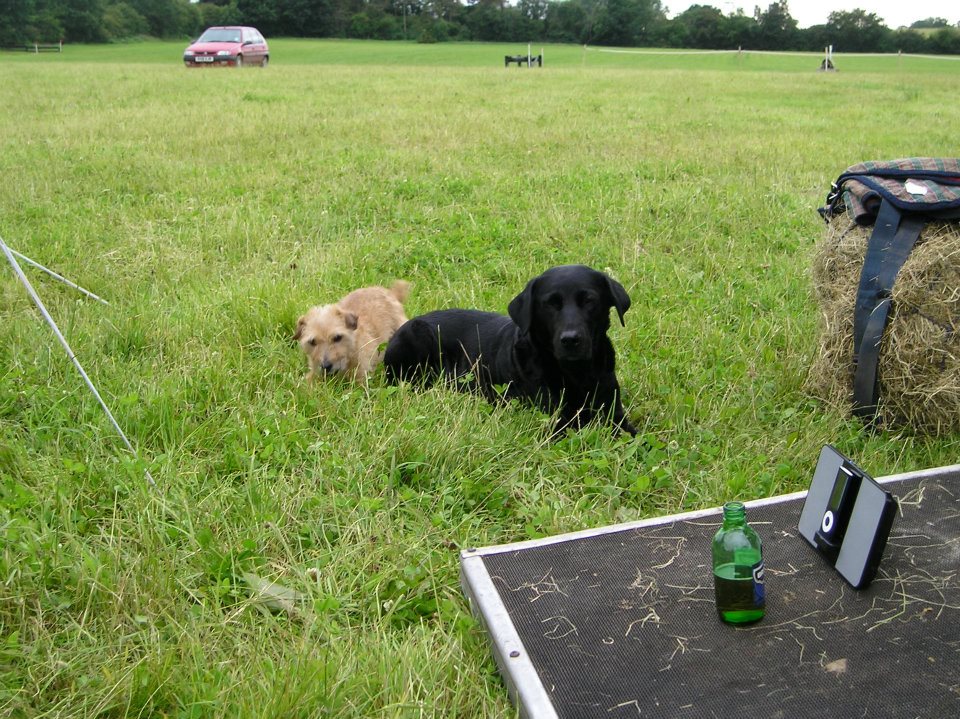
My grooms (and their refreshment!) camping over at a CIC*.
Don’t get me wrong, I like company, but it has to be the RIGHT company. If I’m to spend more than 12 hours in someone’s constant company on a day which probably starts at 5am then they have to be a very good friend indeed. Not only are they few and far between but I also feel incredibly guilty about asking anyone to give up one of their precious work-free days to do a driving and walking marathon with a grumpy old bag who can forget that not everyone can survive for hours on end on a couple of coffees and a flapjack .
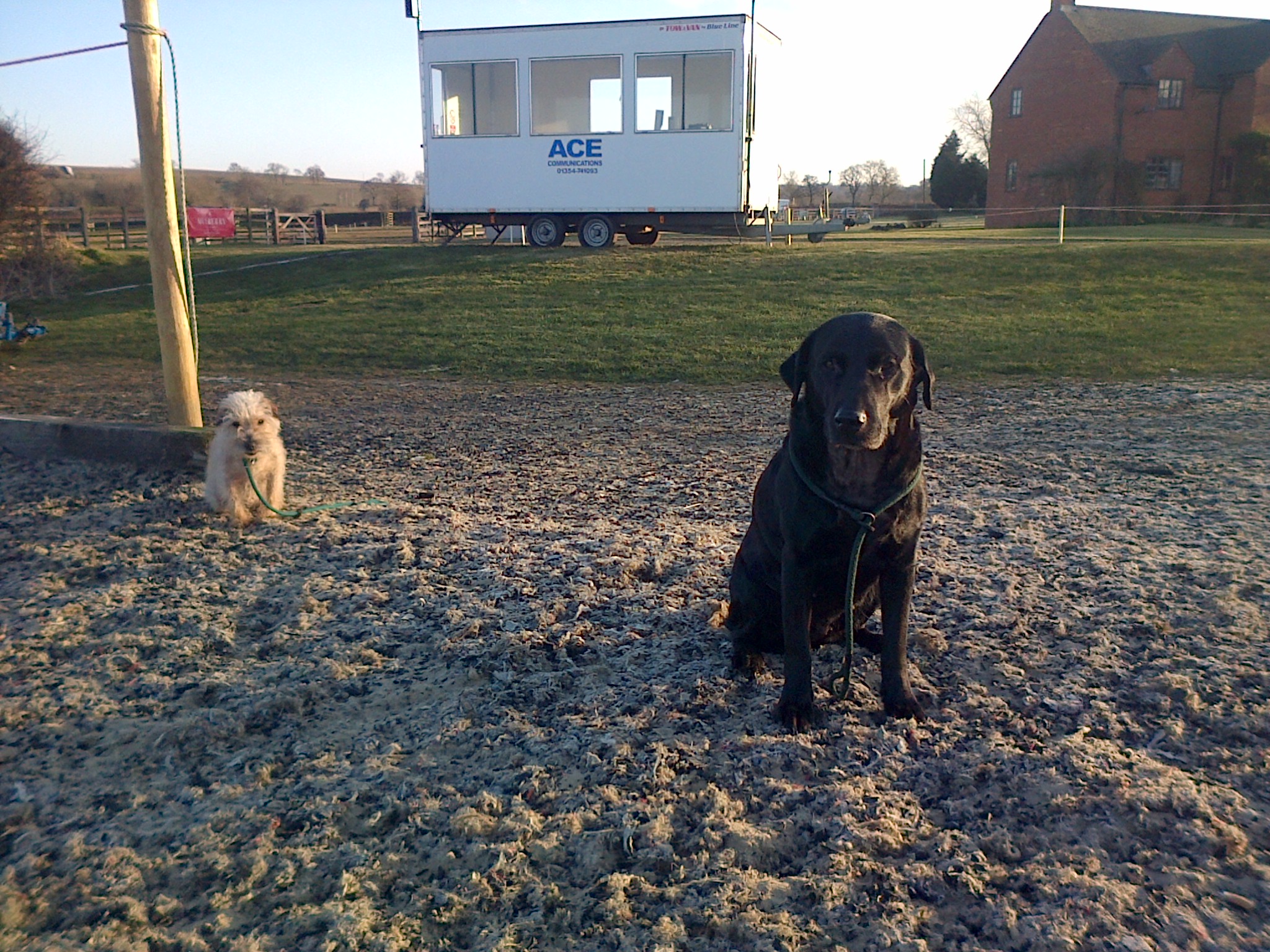
…and patiently waiting whilst I walk the show-jumping track.
Eventing alone is a skill that I’ve evolved over the years, mostly out of necessity. It’s not scary and it’s very straightforward. You just need to be organised!
Firstly the safety aspect. I do generally know a few people that are competing at the venue on the same day. Obviously I have my husband and another good friend as my emergency contacts on the entry form. I always tell the secretary when I pick up my number that I’m there alone. They usually take my car registration number and I give them the name of someone at the event on the day that might be able to help out (take the horse away etc.) in the event of an accident. I also tell the XC starter when I’m in the box that if I have a fall they shouldn’t wait for an anxious family member to come running over. It is also vital (as it should be for everyone!) that the information in your medical armband, especially emergency contact numbers, is up to date. In addition it is useful to leave your name/mobile number etc. taped in a prominent place in your lorry or trailer in case your horse has an accident while you’re walking the course. Not a bad idea in general actually!
OK. Organisation. I have a car and trailer so what I say is pertinent to that. It shouldn’t take much imagination to transfer my advice to a lorry scenario! Pack everything in the order you’re likely to need it. When you arrive check your horse is OK then scoot off and collect your number and walk the XC/SJ. If I need to walk the XC before my dressage I plan to arrive 2hrs before my dressage time. That’s roughly an hour to get my number, check the layout and walk the XC (more if intermediate, less if BE90!), half an hour to get the horse and myself ready and half an hour for the dressage warm-up.
I have a bridle rack that hangs over the top of my folded back trailer top door. I hang my bridles, breastplate and martingale on this. Then I pour two buckets of water – one with my cool boots and washing stuff in, the other for quarter marks and drinking. My grooming kit comes out next and sits next to my trailer wheel guard. My pots of hoof oil etc. and my stud kit are laid out ready on top of the wheel guard. Next the horse comes out. Stud first, and make sure that you’ve either not got changed into breeches yet or have overalls over them! I stud and hoof-oil then do the saddle and re-rug. Next I get changed and get myself completely ready including hat and number. I lay gloves and whip out at the mounting block. Whip the rug off and do quarter marks, pop the bridle on and hop on (first making sure that you closed your car doors and boot!) Done!
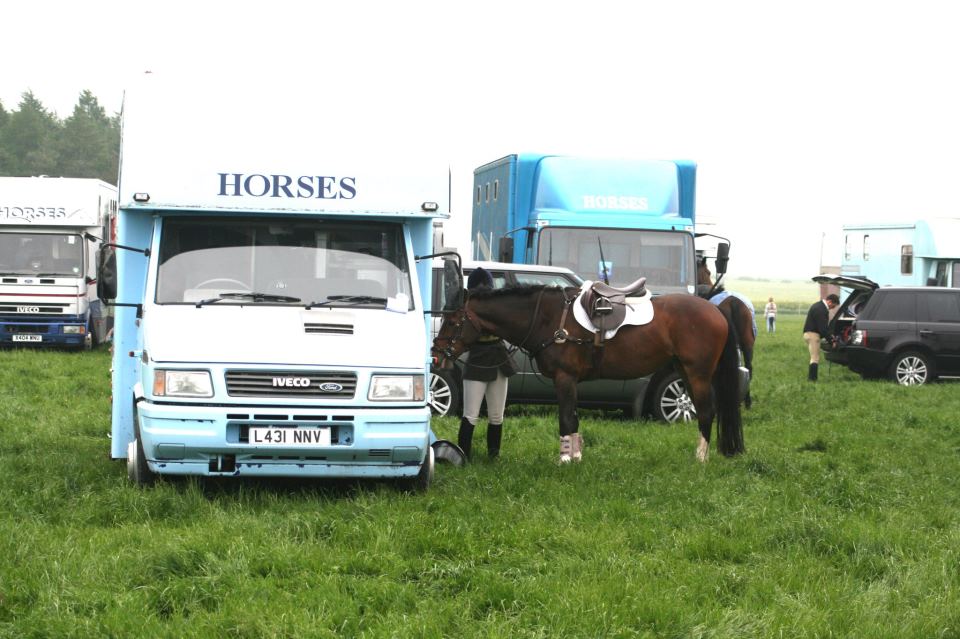
Organisation, organisation, organisation!
On my return from the dressage and depending on times I usually take the bridle and dressage saddle off, pop the show-jumping boots and saddle on, and put the horse back in the trailer whilst I wander off to check what system the show-jumping steward is using and how the course is riding. I’m then ready just to pull the horse out of the trailer, put its bridle on and get back on again. I have extra thick rubber matting in the trailer so I don’t bother taking studs out between phases. I don’t use studs on the inside of shoes but if I did I’d probably put travel boots back on each time the horse was back in the box in case it stepped on itself with a stud.
I pretty much covered the art of warming-up for the show-jumping on your own in this article. Getting ready for XC is easy as times are usually pretty close to the SJ times. Change boots, shorten stirrups, change jacket for XC colours, body protector and medical armband. PUT NUMBER BACK ON AGAIN – you’d be surprised how many people forget this bit! – hop back on and wander over to the XC warm-up.
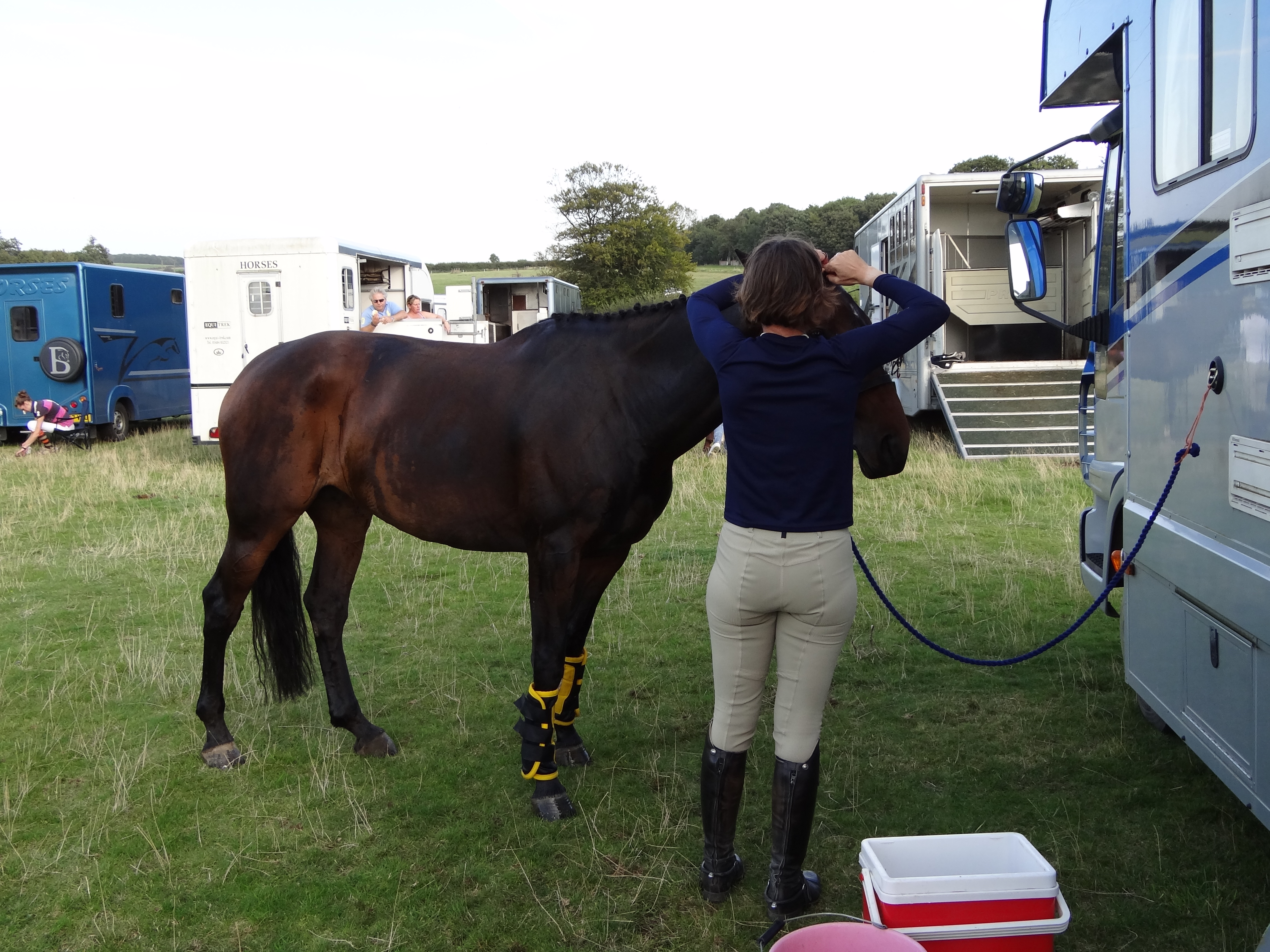
‘All by mysellllfffff, I wanna be… all by myself’
The last bit’s the hardest, but if you’ve got a plan it’s easy-peasy. I’m often washed off, walked off, rugged, boxed, all my kit wiped over and put away and changed into my civvies before the next door lorry with its army of helpers have got their studs out! Have everything ready and laid out. Obviously see to your horse first, but I find it difficult to do much more than untack and start washing off before I need to take my body-protector off. The horse won’t die if you take a couple of seconds to sort yourself out and you’ll make a better job of it if you’re comfortable. My tack (bridle, breastplate, girth) gets dunked in the washing water, sponged off and wiped dry with a towel, dirty boots go in an empty bucket or carrier bag ready to go straight in the washing machine and everything is packed back in the car just as it was when I arrived.
Now is the time for a burger, a pat on the back and a rest! The nice thing is that if you want to hang around for 3 hours for the results then there is no-one to make you feel guilty and conversely if you want to shoot off home with your tail between your legs there is no-one to say ‘oh, can we just stay a bit longer? I want to see XYZ go XC’.
You can adapt this plan to include two horses – it’s even possible if you have the nightmare scenario of alternating from horse to horse for all three phases throughout the day (even if, like me, you use the same saddle for both!). My worst moment was being held for an hour at the far end of the XC course at Breckenbrough while waiting for the competitor ahead of me to be airlifted to hospital. Whilst I was stuck out in the country on one horse I was also supposed to be the last competitor in the show-jumping on my other horse. Luckily they kept the show-jumping judges back until I returned and I did a very quick slosh and swap (the horse returning from the XC was fairly cool having had an hour’s rest mid-course!). It couldn’t have gone much better if I’d had a whole team of grooms and I earned plaudits from the next door lorry for my resourcefulness.
So if you’re worried about going alone take the plunge! You’ll probably end up speaking to other competitors lots more than you would with an entourage – I’m usually good friends with the neighbours by the time I leave at the end of the day. Chill out, don’t panic and have a plan. Good luck!



I applaud anyone eventing alone – I don’t think my brain would cope!
I often go out SJ alone (although not quite as organised as this!) but totally agree with your comments! The safety point is the main one, and I am going to pinch your idea about putting your contact details somewhere conspicuous on the lorry!
Love going alone, and especially love that smug moment when your horse is all washed off and everything tidy while neighbouring box are still untacking. I honestly think i’m faster when no-one is getting in my way. I just wish I could train a dog to get my number then it would be perfect!